


By Sean Spence, Rotary Club of Columbia, Missouri, USA
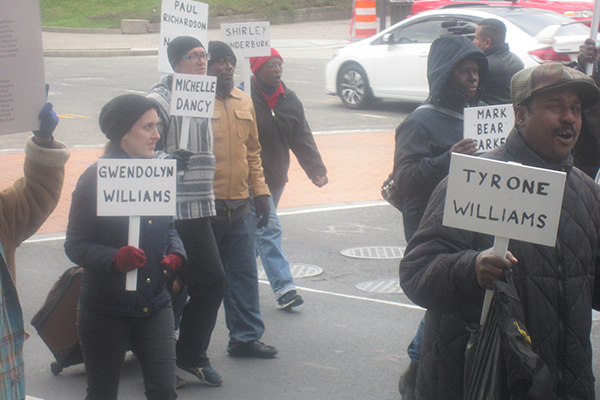
For the past four years, I have helped organize a candlelight vigil in Columbia, Missouri, USA, for people who died without a home.
My role has been the unglamorous work that makes any event happen. Reaching out to poverty services organizations. Inviting elected officials and faith leaders. Contacting media. Confirming speakers. Making sure the right people were in the right place on the right night.
The event itself is simple. We gather outside The Salvation Army Harbor House on 21 December — the winter solstice, the longest night of the year. We light candles. We listen. We read names out loud.
Some of those names stay with you
One year, we read the name of a man named John.
John had been a resident at Harbor House. He was one of the ones who seemed to be turning a corner — he had found work, gotten an apartment, started rebuilding. He was doing what we always say we want people experiencing homelessness to do.
Then he took his own life.
I stood there that night holding a candle with his name on it, and I thought about how close he had come. And about how many people never get that close at all.
Why this became personal
I spent years working at The Salvation Army. That work put me face to face with homelessness in a way I could not unfeel.
You learn quickly that the people whose names get read at a vigil like this were not abstractions. They were people with histories. With families somewhere. With moments where things could have gone differently.
This past December, a current Harbor House resident named Nathan McKeown stepped up and read the seven names we were honoring that night. Then he looked out at the crowd and said:
“I still have drive. I still want to live. I’m sure they did, too.”
I have been doing community work for a long time. That stopped me cold.
A day built for this moment
Homeless Persons’ Memorial Day has been observed since 1990. More than 770,000 people experience homelessness in the United States right now. More than 15,600 died last year while homeless. And fewer than 200 communities hold any kind of formal observance.
That gap feels like an opening — and an obligation.
As Rotary members, we are organized. We are in every community. We are committed to Service Above Self. We have the relationships, the platforms, and the credibility to help close that gap.
What if we used them?
If this resonates with you, I have resources I can share — including a simple planning guide that can help any club organize an event for $50 or less. Reach out at seanspence70@gmail.com.
And if Nathan’s words — or John’s story — moved you the way they moved me, share this post. Let’s get it in front of more Rotarians.
Has your club done anything to recognize Homeless Persons’ Memorial Day? Tell us in the comments below.
https://blog.rotary.org/2026/04/23/the-longest-night-of-the-year/