


By Vinay Gandhi Billapati, past president, Rotary Club Visakhapatnam, Andhra Pradesh, India
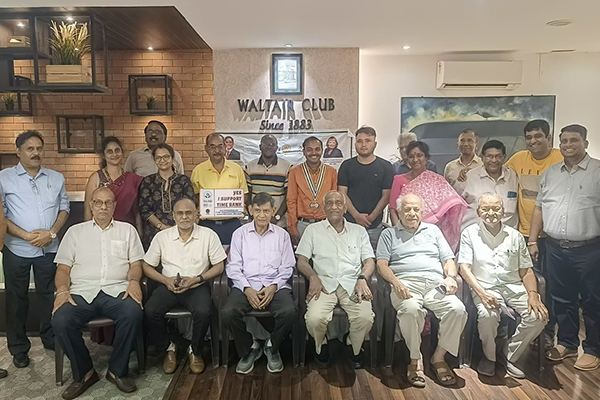
When I joined the Rotary Club of Visakhapatnam in 2019, I was 31-year-old. People had cautioned me that it was a “very senior club.” The average member age was around 65, and I was told members were old fashioned, overly focused on rules, and resistant to change.
However, my father — a Rotarian since 1987 — had unwavering confidence in the club and encouraged me to join. He assured me I would understand its true strength in time.
Now, six-and-a-half years later, I can report my enjoyment at the depth of experience I have found in this club. It’s true the average age of our club is around 65. But with that, comes an average of 40 plus years of service. These are not drawbacks; they are the club’s greatest strength.
Whenever a member proposes a project, it is examined by many experienced minds. They ask questions — lots of them:
- How did you identify this requirement?
- Have you personally visited the beneficiary location?
- Who are the beneficiaries and what is their background?
- Why can’t this requirement be fulfilled by the government?
- Why should Rotary step in?
- What is the budget and source of funds?
- Will the project be sustainable in the long run?
The answers to these questions reveal how well-prepared and confident the proposer is, a process that significantly contributes to the success of our projects.
What I admire most about our experienced members is their approach. They ask questions, they listen patiently, they allow the proposer to explain, and when the answers are convincing, they readily give their approval. If they feel something is not workable, they say so openly. Yet, if a member still wishes to pursue the project using personal resources without club funds, there is no objection.
I have known several instances where projects were taken up, ignoring the advice of experienced Rotarians, and despite the best of intentions and great effort, eventually failed. Experience, it turns out, is a silent teacher.
While some of our experienced members are less able to travel to beneficiary sites, what they lack is made up for in their ability to assess feasibility, sustainability, and long-term impact — often more accurately than we realize.
When a project is genuinely feasible and sustainable, funding is rarely a problem. Our experienced Rotarians step forward, mobilize resources, arrange funds, and ensure that projects are completed on time.
When club members question a president if meetings don’t start on time, or if there are delays on project, or deviations from board agendas, these are not irrelevant questions. They are crucial to the smooth functioning and long-term success of any Rotary club. And they are perfectly aligned with The Four-Way Test. Our club practices that test daily, in a practical and meaningful manner. That, I believe, is the reason for its sustained success over the last 83 years.
Irrespective of who the president is, our membership continues to grow steadily. We undertake impactful projects across all avenues of service, aligning with the seven areas of focus. We contribute meaningfully to The Rotary Foundation every year. And we have committed leaders lined up for the next three years.
I feel truly happy and content to be part of a club enriched with experienced Rotarians who guide us with wisdom, clarity, and commitment. I would encourage others to not immediate write off clubs with a large number of experienced members. They are that club’s greatest strength and may be essential for any Rotary club that aspires to grow, serve, and sustain.
https://blog.rotary.org/2026/05/19/lessons-from-an-83-year-old-club/