

By Doug Lee, a member of the Rotary Club of Dixon, Illinois, USA
When we tell stories about welcoming, we — as we should — tend to focus on the good we’re doing for others. We shouldn’t be shy, however, about admitting the good we’re doing for ourselves, whether that’s the satisfaction we get by lending a hand or the perspective we gain by looking at our nation through outside eyes.
It’s been almost four years since I logged onto the Welcome.US website to learn how to help Ukrainians fleeing Russia’s invasion. What I learned inspired me to assemble a community-based team, including several fellow members of the Rotary Club of Dixon, that led efforts to sponsor two Ukrainian families. A mother, a father, and their three young children arrived at the end of November 2022, and a young couple followed a month later. The time with them since has been one of my life’s biggest blessings.
The first weeks and months were trying for everyone. They struggled with language and paperwork and transportation. We struggled with balancing our need to help and their need to learn. Soon, though, children were enrolled in school, jobs were obtained, cars were purchased, and routines were developed.
Through it all, our team members never felt more alive. We problem-solved, we supported, we laughed, and we loved. Our community embraced our new friends, sometimes with tender and knowing smiles, and sometimes with more. I’ll never forget our first Christmas shopping adventure, only a few weeks after our first family arrived, when an older gentleman none of us knew approached us and handed the family $50. “I hope you have a nice Christmas,” he said shyly before hustling away.
As our families have acclimated to their new home and become more independent, they’ve remained deeply grateful for everything our team, our community, and our country have provided. When they arrived, they would have been satisfied with living in safety. Now, three-plus years later, they’ve enjoyed so much more.
They’ve pursued employment opportunities to work unbelievably hard. They’ve saved, they’ve explored, they’ve learned, and they’ve experienced new freedoms. They’ve marveled at life in America and are dumbfounded that U.S. citizens seem hopelessly and bitterly divided.
Unfortunately, that division explains why our new friends’ time here appears to be coming to an end. The U.S. Citizen and Immigration Services website that once offered newcomers encouragement and assistance now features “News & Alerts” that trumpet convictions, deportations, and denaturalization efforts. Applications for extensions languish, draining hope and puncturing dreams every passing day.
I’ve never felt more helpless. I lament that our national discourse fails to distinguish between legal and illegal immigration. I lament that lawmakers have failed to see that Uniting for Ukraine and similar programs offer a model for reforming an immigration system mired in political impasse. I lament that our inability to figure out how to enforce immigration laws humanely has led us to turn our backs on immigration — and immigrants — entirely.
And I ache for our families. I cannot fathom how they live in the uncertainty swirling around them. What are their options? Where will they go? What will they do? How will parents explain it to their children?
Yet, when I attempt to comfort them, I find them trying to comfort me. It’s OK, they tell me. It’s not my fault. They’ll manage. They’re thankful for the opportunity to come here, even if their stay is shorter than they’d hoped. This is a great country, they remind me. I’m lucky to live here, they say. And, of course, they’re right.
I’ve been further reminded of my good luck by my participation in Welcome.US’s Citizen Guide program, which matches volunteers with green card holders studying for the citizenship exam. I’ve been matched with a delightful young single mother who came here 10 years ago. Although she’s also tending to her three daughters, working, and taking classes to earn her GED, she is determined to pass her citizenship interview and civics test to achieve her dream of becoming a U.S. citizen.
I majored in history and political science, but I never imagined how hard it would be to explain our three branches of government to someone who grew up in a country roiled by political and gang violence. Or to explain why 435 representatives are elected to two-year terms, 100 senators are elected to six-year terms, a president is elected to a four-year term, and Supreme Court justices are appointed for life. Or to explain a sprawling federal bureaucracy led by Cabinet secretaries most citizens can’t name.
But, like my Ukrainians, my learner sees our democracy as the shining city on a hill that we claim it to be. She wants to learn everything she can about it, not just so she can pass the test but so she can understand the system that ensures the “life, liberty, and pursuit of happiness” she’s studied. Unburdened by the cynicism so many Americans have developed, she clearly sees the opportunities that freedom provides.
Welcoming isn’t easy, especially now. Those difficulties, however, only reinforce that our work is more needed than ever.
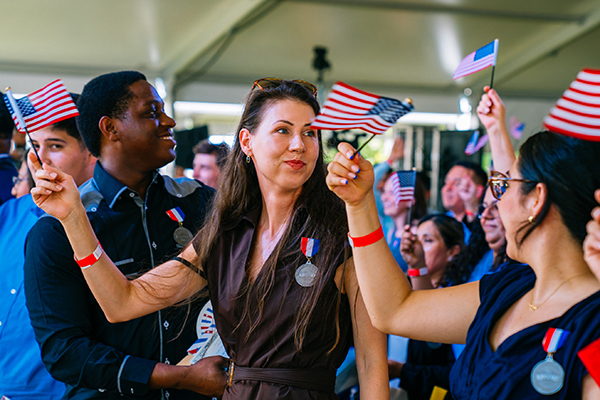
When we welcome immigrants, we change lives, we offer hope, and we honor those who migrated here generations ago to forge a free and democratic nation. In return, we receive much, including the necessary reminder that we mustn’t take that nation or its blessings for granted.
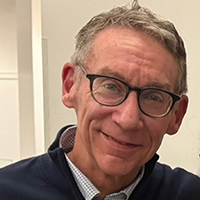
About the author: Doug Lee, an Illinois circuit court judge, is a private sponsor of Ukrainian refugees, Citizen Guide, and member of the Rotary Club of Dixon, Illinois.
Learn more about Welcoming Week 10-19 September and Citizenship Day and Constitution Day 17 September. Watch this video about how, as a Rotary member, you can take part in the Citizen Guide Program.
https://blog.rotary.org/2026/09/10/what-dixon-rotary-club-learned-by-welcoming-ukrainian-families/